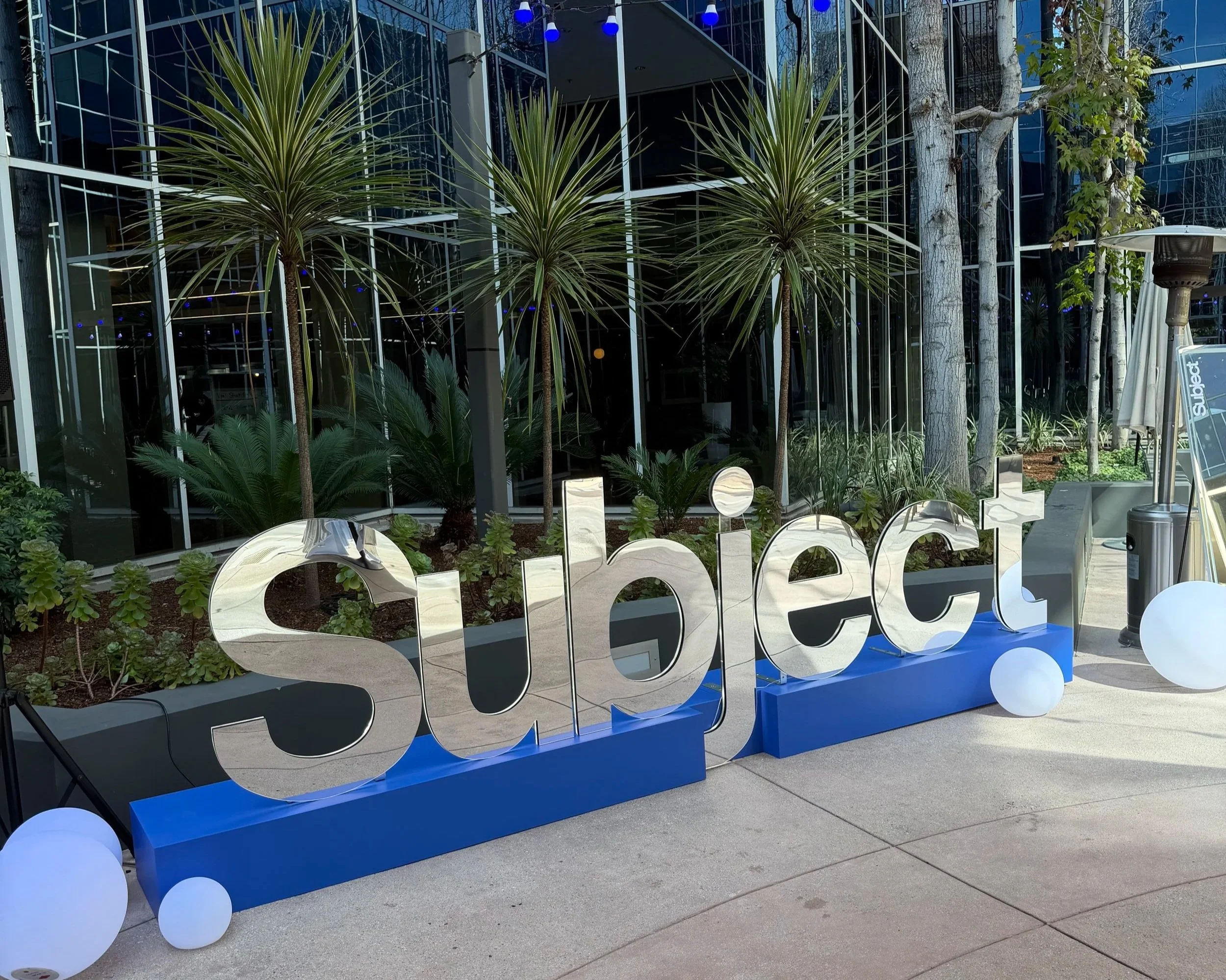
We had a great conference at Subject.ai’s office last week. Alongside John Gannon, I had the opportunity to share our explorations in AI video production. We also presented recent findings from user research testing content with high school students across two markets.
One thing is clear: the bar for educational experiences is rising. Not because students are less capable, but because the rest of the digital world has trained them to expect clarity, personalization, and speed. That applies to the educational video content they consume and to the broader product ecosystem that surrounds it.
Education has always been a challenging environment: complex needs, limited capacity, and a wide range of classroom contexts. Yet the lived experience in many classrooms still includes outdated materials, dull HR-training-style videos, and “digital” products that feel like scanned worksheets behind a login screen.
At the same time, the students we’re designing for (especially in grades 6–12) are changing fast. They’ve grown up with a smartphone in their hands, content-on-demand, and access to the world’s information instantly. For them, social is like electricity: it’s always on.
They’re also increasingly AI-literate. The ChatGPT moment was only three, short years ago; but to them, it might as well be a lifetime.
So, on the research and product design side, by using both generative and evaluative methods, we continually work to understand the full set of touchpoints that add up to a cohesive experience – and orchestrate accordingly.
Toward the end of the conference, I had a great conversation with a district leader. He said that after our talk, he was inspired to gather feedback from their own student body more often.
That’s the work: keep listening, keep iterating.
(Originally published on LinkedIn.)